


Museums
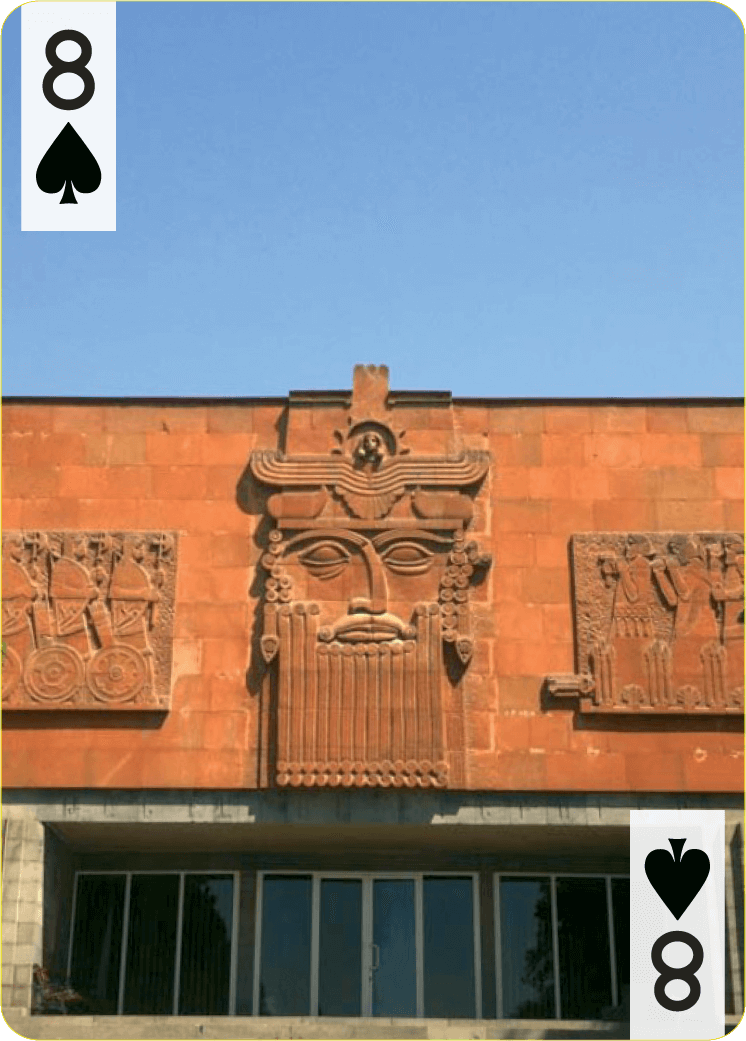
8 of Spades – Erebuni Historical-Archaeological Reserve-Museum.
Located on Arin Berd hill, near the ruins of the Urartian fortress of Erebuni. The museum houses many exhibits uncovered during excavations of the fortress from 1950 to 1959, as well as from the nearby Urartian city of Teishebaini, excavated on Karmir Blur hill between 1939 and 1958. The most valuable exhibits include 23 cuneiform tablets from the Urartian period.
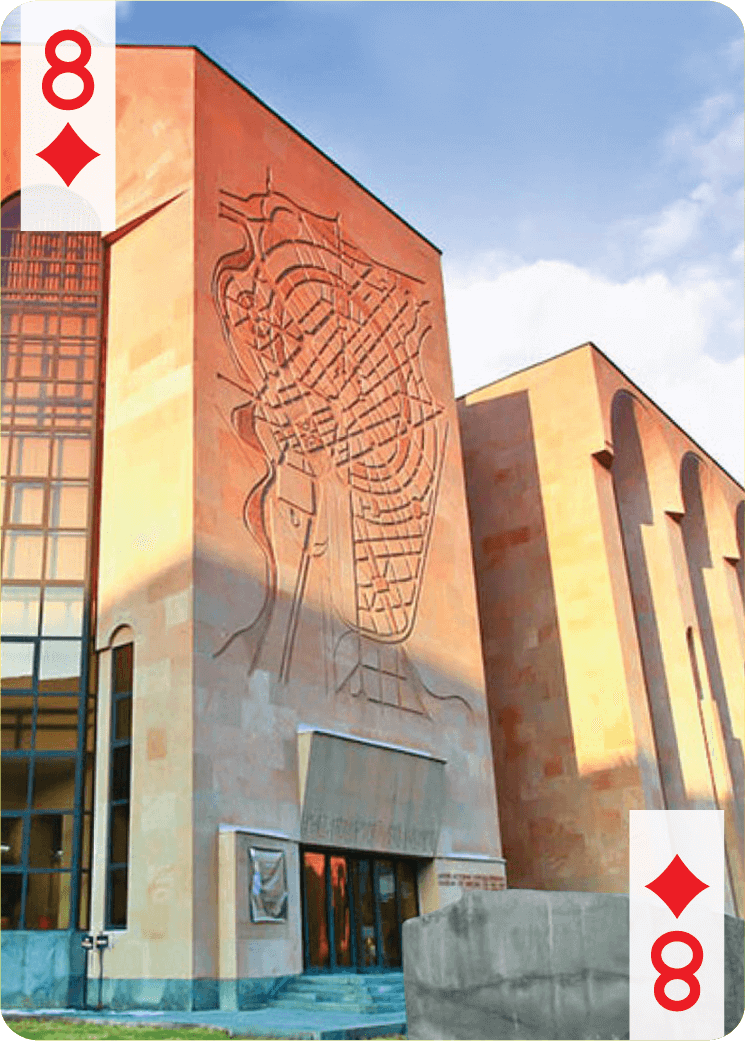
8 of Diamonds – Yerevan History Museum.
Located in the Yerevan City Hall building. Founded in 1931 in two rooms on the second floor of the Yerevan fire station, the museum was originally named the Communal Museum. In 1936, it was renamed the Yerevan History Museum and moved to the Blue Mosque, where it remained for 56 years. In 1994, it relocated again — to the former St. Hripsime girls’ gymnasium, then in 1997 to Yerevan’s Secondary School No. 1, and finally, in 2005, found its permanent home in the left wing of the new City Hall building.
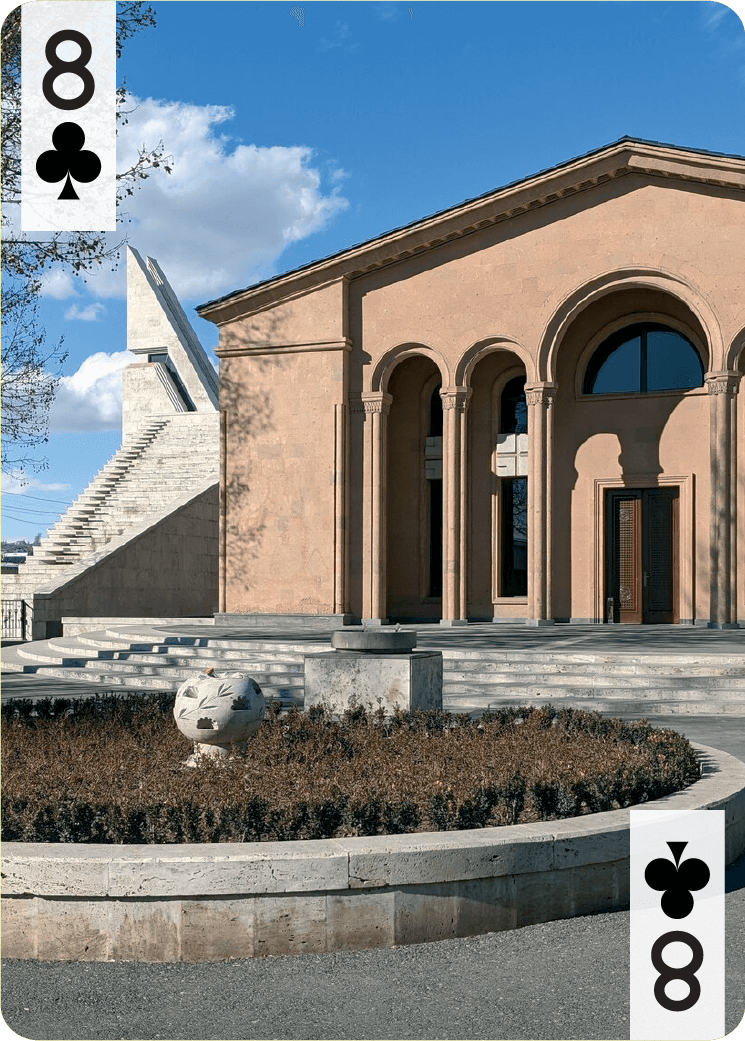
8 of Clubs – Komitas Museum-Institute.
Located in Komitas Park. The museum is dedicated to the life and creative work of the great Armenian composer. The eight permanent exhibition halls display his personal items, handwritten scores from his time at the Gevorkian Seminary, musicological and spiritual heritage, different studies by art historians about Komitas the musician, published books, numerous musical compositions, paintings, sculptures, and films.
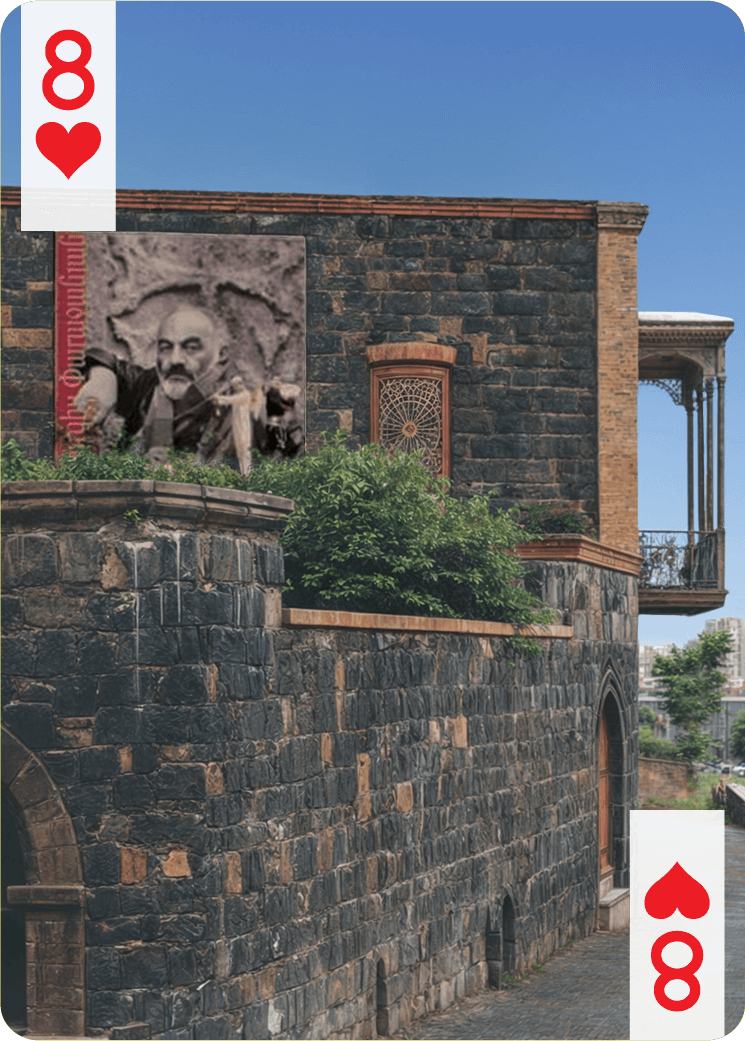
8 of Hearts – Sergei Parajanov House-Museum.
Located in central Yerevan at 15–16 Dzoragyugh Street. Founded in 1988 after the artist and filmmaker’s first exhibition in Armenia. After moving to Yerevan, Parajanov chose the location himself — the ethnographic quarter of Dzoragyugh — and initiated the construction project.
Due to the 1988 Spitak earthquake and socio-economic issues, the museum opened only in June 1991, a year after his death. The collection includes about 1,400 items, including interiors from Parajanov’s Tbilisi home and personal belongings transferred to Yerevan by his own will during his lifetime. The museum exhibits his installations, collages, assemblages, drawings, dolls, and hats. It also contains unpublished screenplays, librettos, and artworks created during his imprisonment — including “thalers” made from kefir bottle caps in Lukyanivska prison.