


Libraries
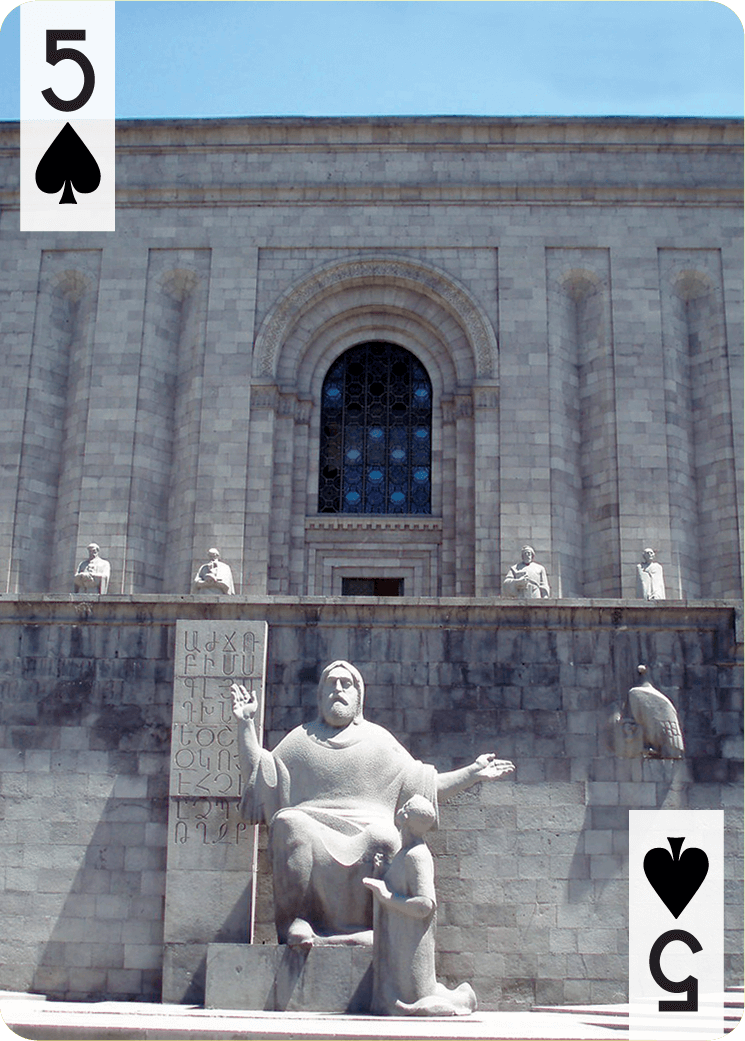
5 of Spades – Matenadaran
The Mesrop Mashtots Museum-Institute of Ancient Manuscripts is a research center and one of the major manuscript repositories in the world — and the largest depository of ancient Armenian manuscripts. It also houses a museum open to visitors.
It was established on the basis of the manuscript collection of the Holy See in Etchmiadzin.
Matenadaran’s collection includes over 17,000 ancient manuscripts: 14,500 in Armenian, and 2,500 in other languages — Arabic, Assyrian, Persian, Indian, Russian, Georgian, Latin, Ethiopian, and more. Many of the books are decorated or embroidered with gold and silver, their covers made of ivory or inlaid with precious stones.
The oldest manuscript fragments date back to the 5th–6th centuries, while the oldest illustrated pages and miniatures are from the Etchmiadzin Gospel (6th–7th centuries). The oldest complete manuscript is the Gospel of Lazarus (887 AD), the largest — the Msho Charentir (Monastery of the Holy Apostles of Mush, 1200–1202, 70.5×55 cm, 27.5 kg), and the smallest — the Tonatsuyts (1434, 4×3 cm, 19 g).
The modern Matenadaran building was completed in 1959, designed by architect Mark Grigoryan.
Located at: 53 Mesrop Mashtots Avenue
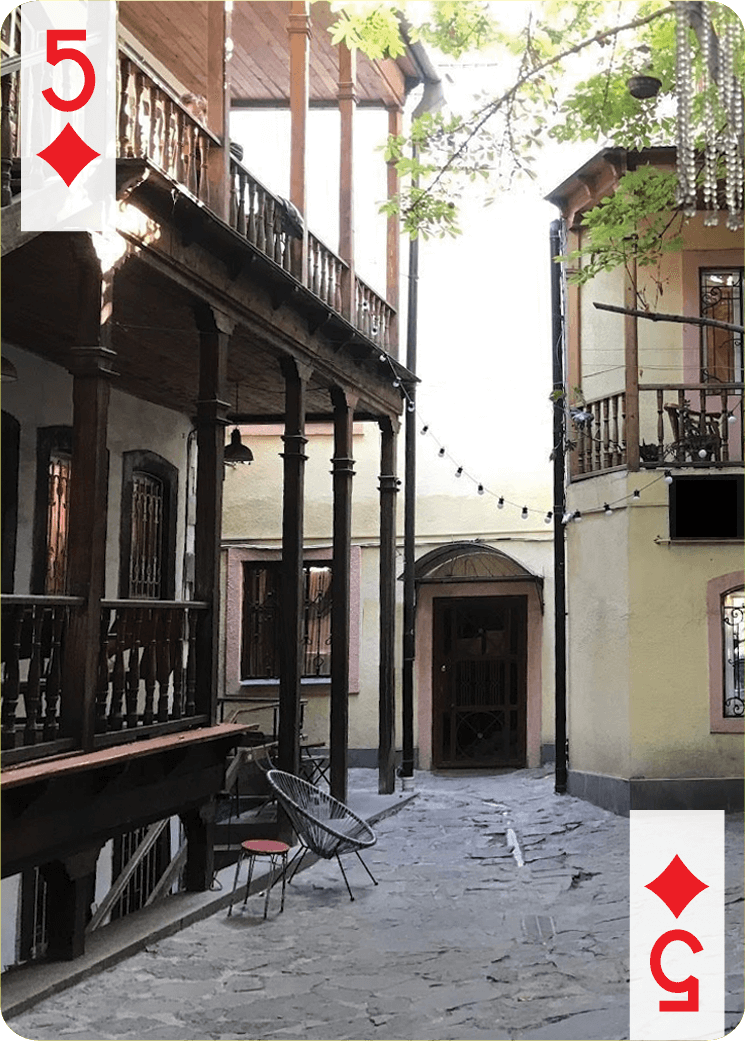
5 of Diamonds – Mirzoyan Library
The first active photolibrary in the region, founded in 2014 by acclaimed documentary photographer Karen Mirzoyan.
The ground floor hosts a reading room with books from various genres, focusing mainly on art and documentary photography.
Upstairs you'll find a gallery and café. The space regularly features workshops, lectures, and events — not only around photography, but other art forms as well.
Located at: 10 Mher Mkrtchyan Street
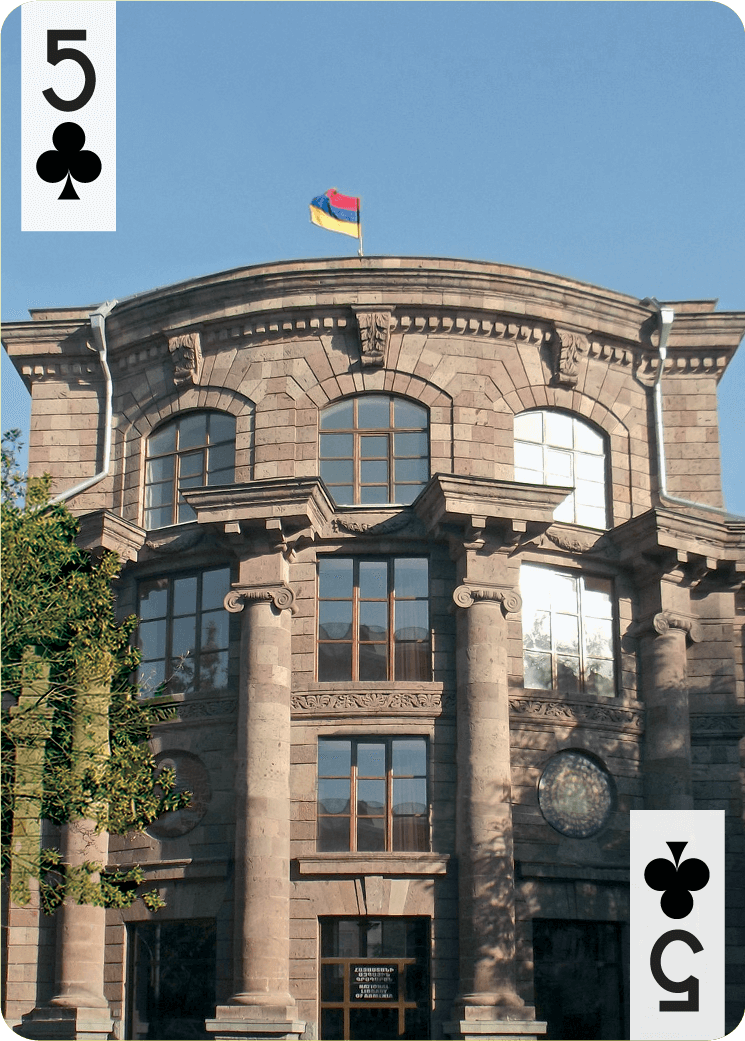
5 of Clubs – National Library of Armenia
The largest repository of Armenian publications in the world and a national center of library science.
Its rich collections include manuscripts, books, journals, periodicals, dissertations, art archives, and more. Among its highlights: the first printed Armenian book Urbatagirk (“Book of Friday”, Venice, 1512); the first Armenian periodical Azdarar (“The Herald”, Madras, 1794–1796); and the first printed Armenian map Hamatarats Ashkharhatsuyts (“Universal World Index”, Amsterdam, 1695).
The library occupies four buildings; the oldest is the main building, designed by architect Alexander Tamanyan and completed in 1939.
Located at: 72 Teryan Street
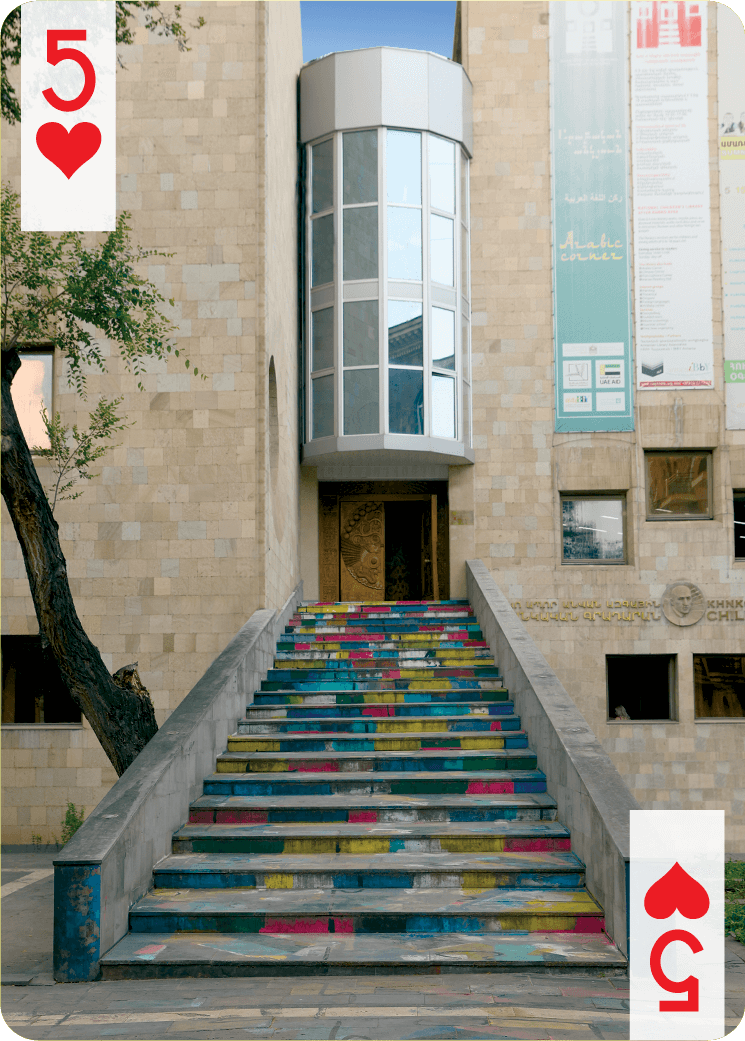
5 of Hearts – Khnko Aper National Children’s Library
Founded in 1933, the library was named in 1935 after the death of Armenian educator and children's poet Atabek Khnkoyan (Khnko Aper).
To mark the 1979 International Year of the Child, the library was granted a new building in 1980, designed by architects Levon Ghalumyan and Ruzan Alaverdyan.
It holds the largest collection of literature for children and teens (ages 3 to 18) — over 500,000 items in Armenian and foreign languages, including music books, periodicals, audiovisual materials, and digital media.
There are also departments of German and Persian literature. Art, theater, and poetry studios operate at the library, and events are regularly held — from author meetups to book launches.
Located at: 42/1 Teryan Street